Sommario
The decarbonisation of the building stock represents one of the key challenges for achieving the European climate targets for 2030 and climate neutrality by 2050. In this context, Skills2Decarb was launched as a European research project aimed at bridging the skills gap in the construction sector, equipping Architecture, Engineering & Construction (AEC) professionals and workers to lead the transition towards zero-emission buildings.
A project designed for the Italian context
The Italian building stock has distinctive characteristics: it is on average very old and, consequently, often energy inefficient. 74% of buildings were constructed before 1976, the year when the first energy-saving regulations were introduced.
According to the EU Construction Sector Observatory, the sector also suffers from a significant skills shortage, which represents a real bottleneck in the adoption of innovative solutions for the energy transition and sustainable building management. Additional challenges include limited competences in sustainability, circularity and digitalisation, low participation in lifelong learning, and difficulties in recognising skills acquired in non-formal contexts.
Skills2Decarb was created to respond concretely to these challenges through an approach tailored to the Italian renovation market and aligned with the main European energy and climate directives.
Upskilling and reskilling for professionals and workers
At the core of the project is the development of a structured framework for the upskilling and reskilling of:
AEC professionals (white collar): designers, engineers, consultants, and professionals involved in building design, management and maintenance phases;
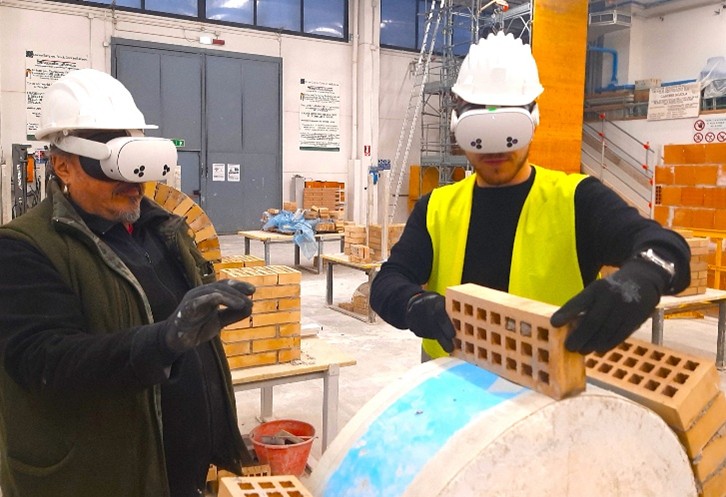
Operational workers (blue collar): particularly site managers and on-site workers.
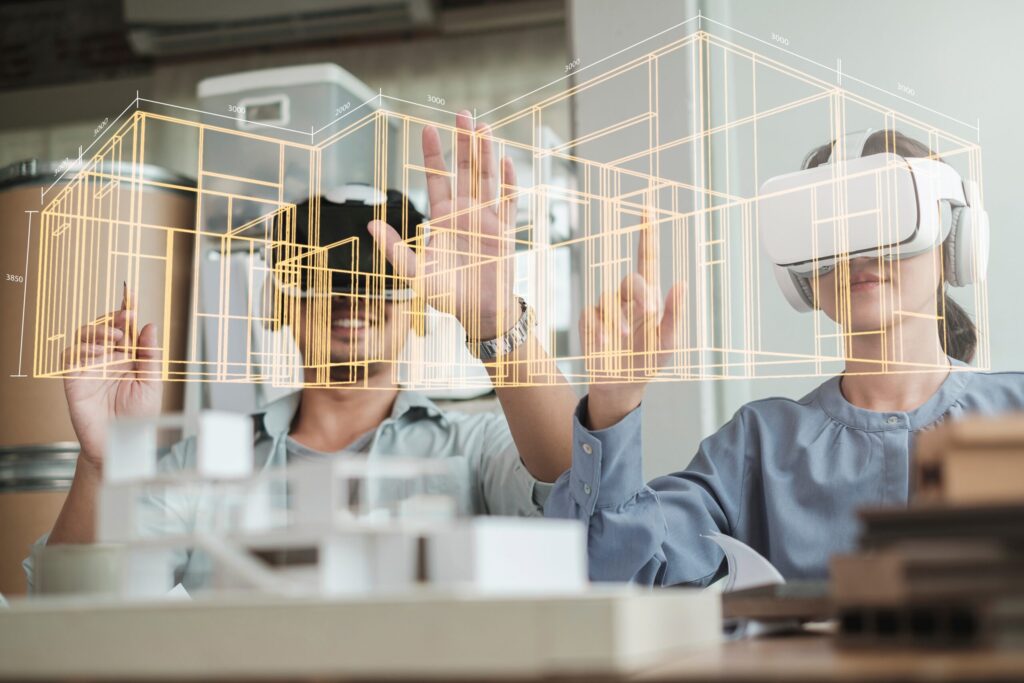
The skills developed cover both technical aspects — such as zero-emission buildings, circular economy, digitalisation, and smart innovative technologies — and transversal competences, which are increasingly central to sector transformation processes.
A two-phase training model
Skills2Decarb introduces a training model structured in two complementary phases, designed to ensure effectiveness, transferability and long-term impact.
Phase 1 – Train-the-Trainers
This phase focuses on building a qualified network of trainers. Skills2Decarb consortium experts will train:
White-collar trainers within partner organisations, strengthening their technical and methodological competences;
Site managers, who will be upskilled to take an active role in training workers through structured on-the-job training pathways.
Phase 2 – Train-the-Trainees
This phase targets AEC professionals and workers and will deliver training through a blended learning model.
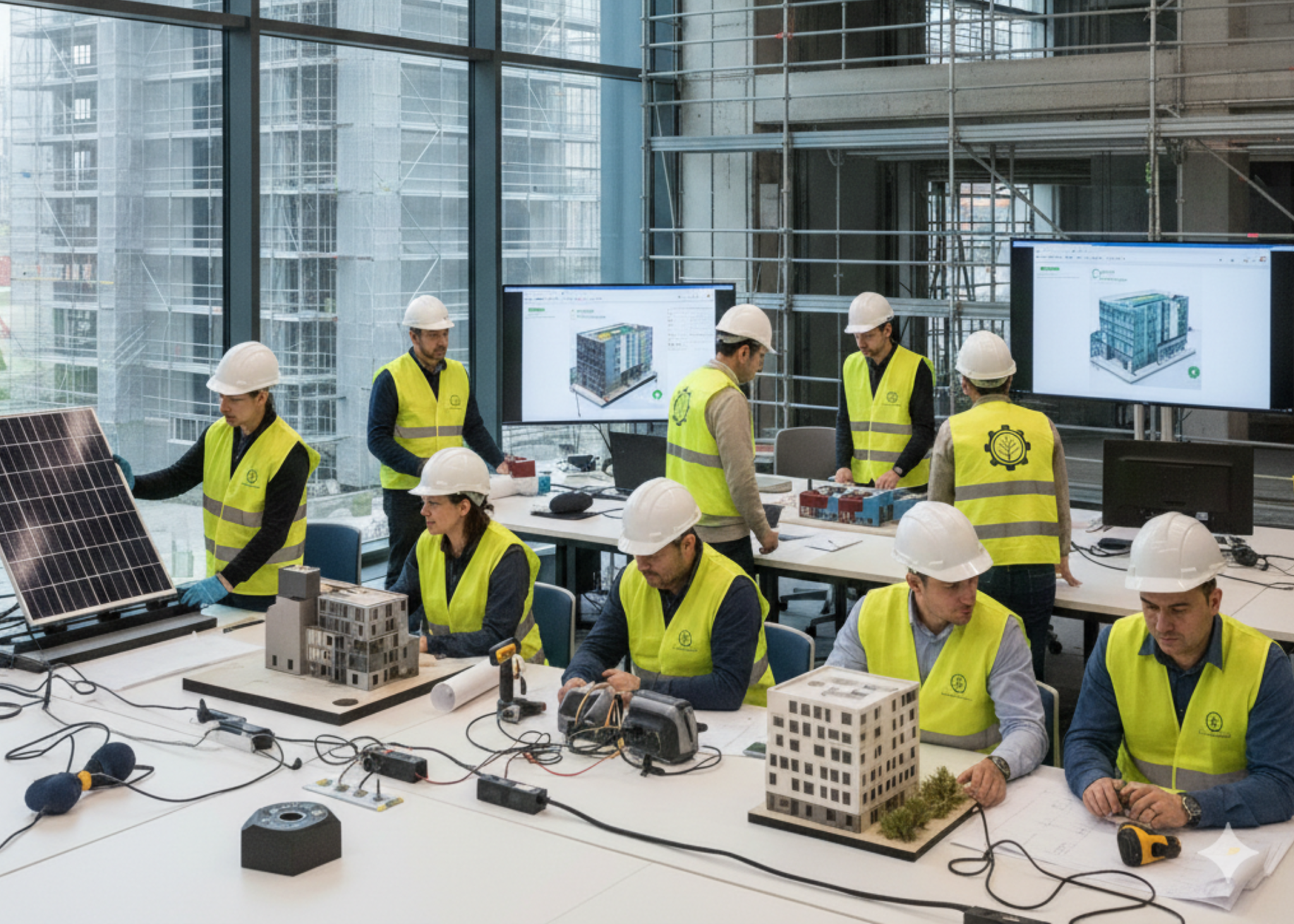
Activities will be implemented through a network of training hubs distributed nationwide at partner premises, ensuring a widespread approach aligned with regional specificities.
Towards new qualifications and the ZEB Manager profile
Beyond training, Skills2Decarb also addresses the evolution of professional qualification systems, aiming to better align them with the needs of the energy and digital transition in the construction sector.
The project analyses existing national and regional qualifications, identifies green and digital skills gaps and misalignments, and formulates operational recommendations to update professional profiles.
Among the key outputs is the proposal of a new professional profile: the Zero Emission Building (ZEB) Manager, a role combining expertise in environmental sustainability, digital tools, and resource efficiency, responsible for coordinating the design, construction and management processes of zero-emission buildings.
A collaborative and replicable approach
The project involves a multidisciplinary consortium bringing together expertise in research, training, sustainability, digitalisation and construction.
Alongside technical activities, Skills2Decarb establishes an Ambassadors Board composed of key organisations and institutions at national and European level, with the objective of:
Promoting dissemination of project results;
Supporting model replicability;
Contributing to policy recommendations.
The role of R2M Solution and AVANTI
As project coordinator, R2M Solution leads the development of the methodological framework, the coordination of activities, and the dialogue between research, market and policy.
The project also integrates AVANTI,
an internally developed AI platform that combines Artificial Intelligence and language analysis within skills management processes, supporting upskilling and reskilling pathways.
Skills2Decarb represents a further step in the partners’ commitment to transforming European innovation into concrete tools supporting the energy transition and sustainability of the construction sector.