Sommario
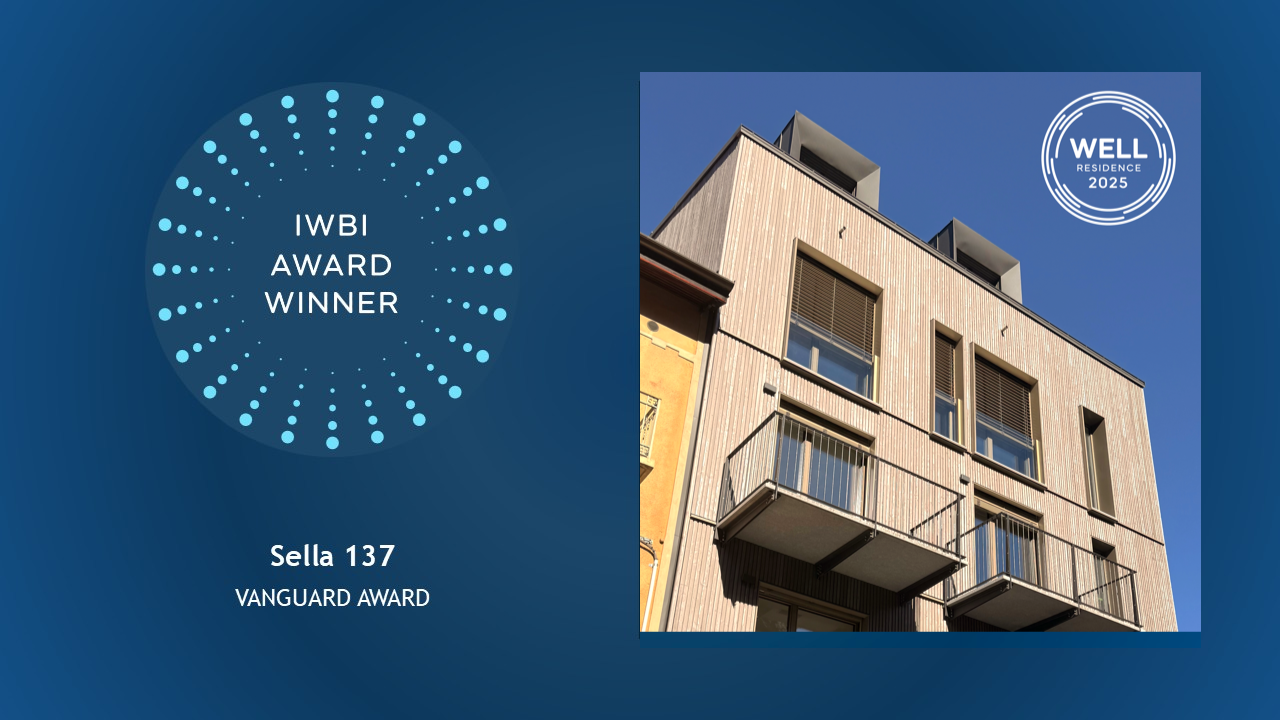
In the European real estate landscape, where asset quality, ESG criteria, and market attractiveness are becoming increasingly central, Sella 137 stands out as a benchmark case: it is the first WELL Residential project in Italy and the European Union to achieve the WELL for Residential certification under the WELL Building Standard promoted by the International WELL Building Institute (IWBI), as well as the Vanguard Award.
This is not merely a technical milestone, but a strategic positioning choice: wellbeing becomes a measurable and certified parameter, capable of concretely impacting competitiveness and asset value in the residential market.
The WELL for Residential protocol
WELL for Residential was created to promote healthy, safe, and resilient living environments through design criteria that enhance people’s physical, mental, and social wellbeing.
Designed for multifamily buildings, it evaluates over 100 requirements across 10 key categories (including air, water, light, and comfort), with the goal of transforming homes into spaces that actively support health and quality of life.
In the case of the Sella 137 project in Turin, these principles were translated into concrete design choices, where sustainability and technological innovation interact coherently. The integration of real-time environmental monitoring systems and advanced digital tools enables dynamic management of comfort and energy consumption, ensuring high performance and greater long-term resilience.
An international recognition
In 2025, Sella 137 received the Vanguard Award at the IWBI Awards, a prize recognizing projects that anticipate market evolution and introduce new quality standards.
This recognition confirms the pioneering nature of the development: a model in which health, architectural quality, and technological innovation are seamlessly integrated, helping redefine expectations in contemporary residential design.
A European milestone
The result stems from an integrated design approach developed under the guidance of Architect Nada, successfully combining architectural quality, technological innovation, and a strong focus on the end user.
Among the project’s distinctive features:
Indoor air quality: mechanical ventilation with high-performance filters, UV surface treatments, and smoke-free policies to ensure healthy environments.
Water quality: continuously monitored hydraulic and water treatment systems to ensure safe drinking water and prevent contamination or stagnation risks.
Physical activity and connection with nature: accessible outdoor spaces, pedestrian pathways, and design strategies encouraging stair use.
Lighting and visual comfort: large windows with blackout curtains and dimmable high color-rendering LED lighting to enhance visual comfort and sleep quality.
Thermal and acoustic comfort: high-performance insulation, intelligent indoor climate control, and optimized acoustic performance.
Materials and long-term hygiene: non-toxic finishes, antibacterial surfaces, and cleaning protocols using low-emission products.
Safety and resilience: protected entrances, smart sensors, and climate backup systems to ensure greater infrastructure safety and resilience.
The role of R2M Solution
R2M Solution supported the entire certification process with targeted technical and strategic guidance, ensuring the effective integration of WELL requirements into both design and construction phases.
Its expertise in sustainability and green building made it possible to translate protocol objectives into concrete solutions focused on quality, innovation, and value creation for residents and stakeholders.
Sella 137 demonstrates that WELL certification can be fully integrated into high-performance residential projects, offering a replicable model for the future of housing in Italy and across Europe.